Playbour – Work, Pleasure, Survival
Furtherfield Gallery, Finsbury Park, London · 2018
When does play become work? How much of ourselves do we give away when we participate in networked life?
Playbour: Work, Pleasure, Survival was an exhibition and collaborative research project curated by Dani Admiss at Furtherfield Gallery, exploring how digital technologies were changing the boundaries between work, leisure and everyday life.
As social media, smartphones and online platforms became increasingly embedded in daily life, activities once understood as personal or recreational were becoming sources of economic value. Sharing photographs, building friendships, expressing emotions and playing games could all generate data, attention and labour for others.
Rather than treating these changes as an inevitable future of work, Playbour examined how people were already participating in systems that measured, rewarded and shaped their behaviour, often without fully understanding the processes involved.
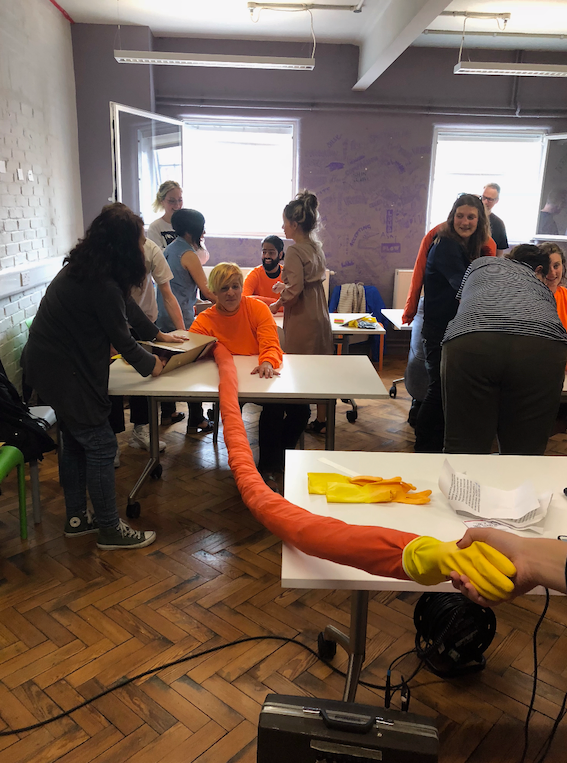
The project began with a three-day co-research lab bringing together artists, designers, activists and researchers. Through performances, experiments, games and collective discussion, participants investigated the ways surveillance, automation and gamification were becoming part of ordinary experience.
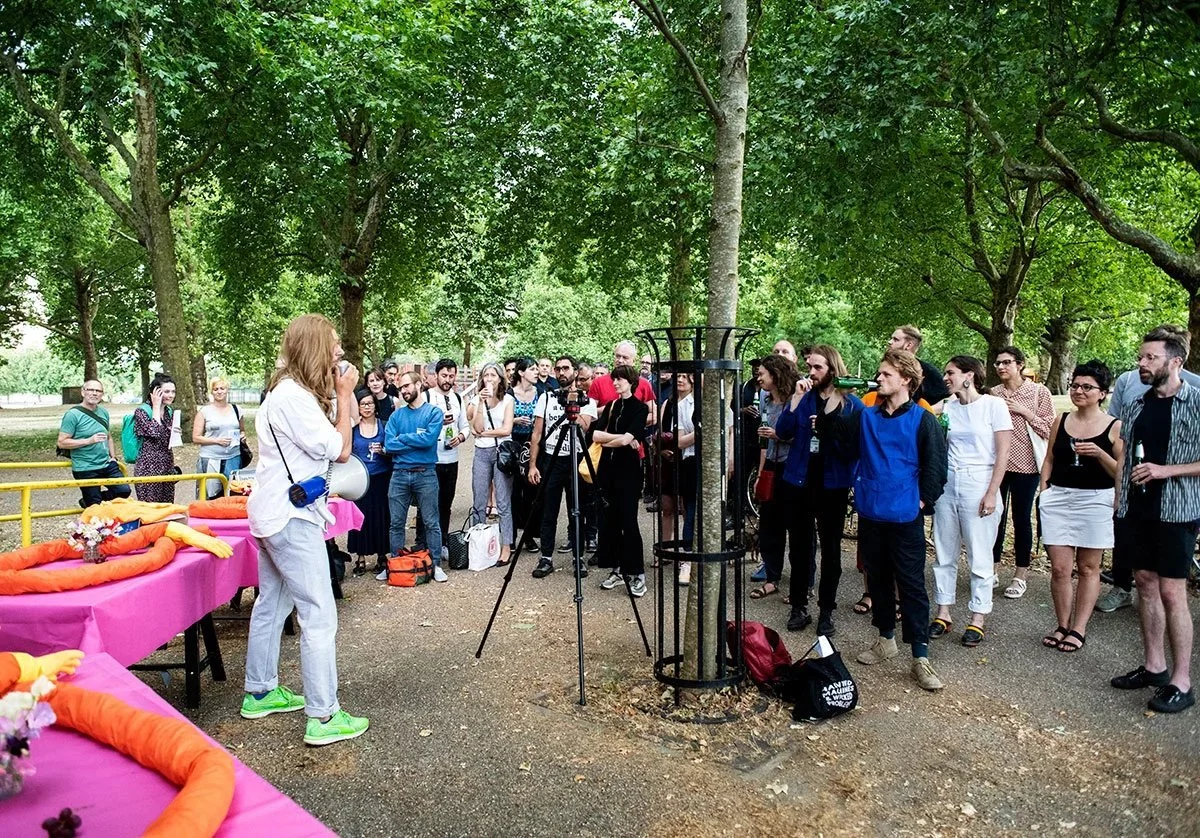
The research developed into an immersive exhibition of interactive games at Furtherfield Gallery. Visitors were invited to participate in playful scenarios that made the workings of these systems tangible, from the automated allocation of public services and hostile design to the labour performed by trees and the relationship between self-improvement and economic exploitation.
Drawing on Furtherfield's Do It With Others approach, the project also experimented with curating as a form of collective research. Rather than separating experts from participants, it created opportunities for people to bring their own experiences into the process of making and understanding the work.
Playbour was interested in the contradictions of networked life: the pleasures of connection and creativity alongside the extraction of value from attention, emotion and social relationships. It asked how people might recognise their participation in these systems, find room for refusal and develop greater agency over the worlds they help create.
Format: Exhibition, co-research lab and participatory artistic research
Exhibition & Commissions
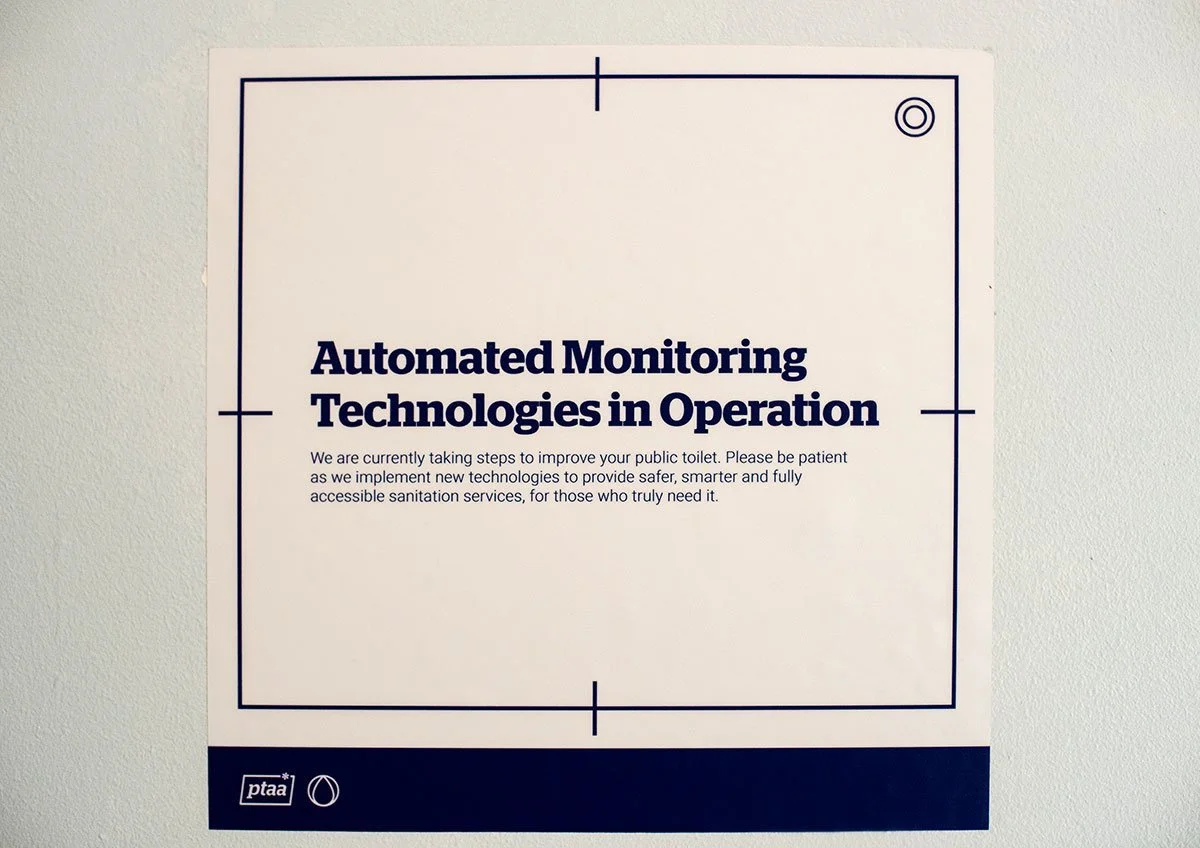
Public Toilet — Arjun Harrison-Mann and Benjamin Redgrove: An interactive work questioning who gets to decide how public space and services are used, and how automated systems influence access to them.
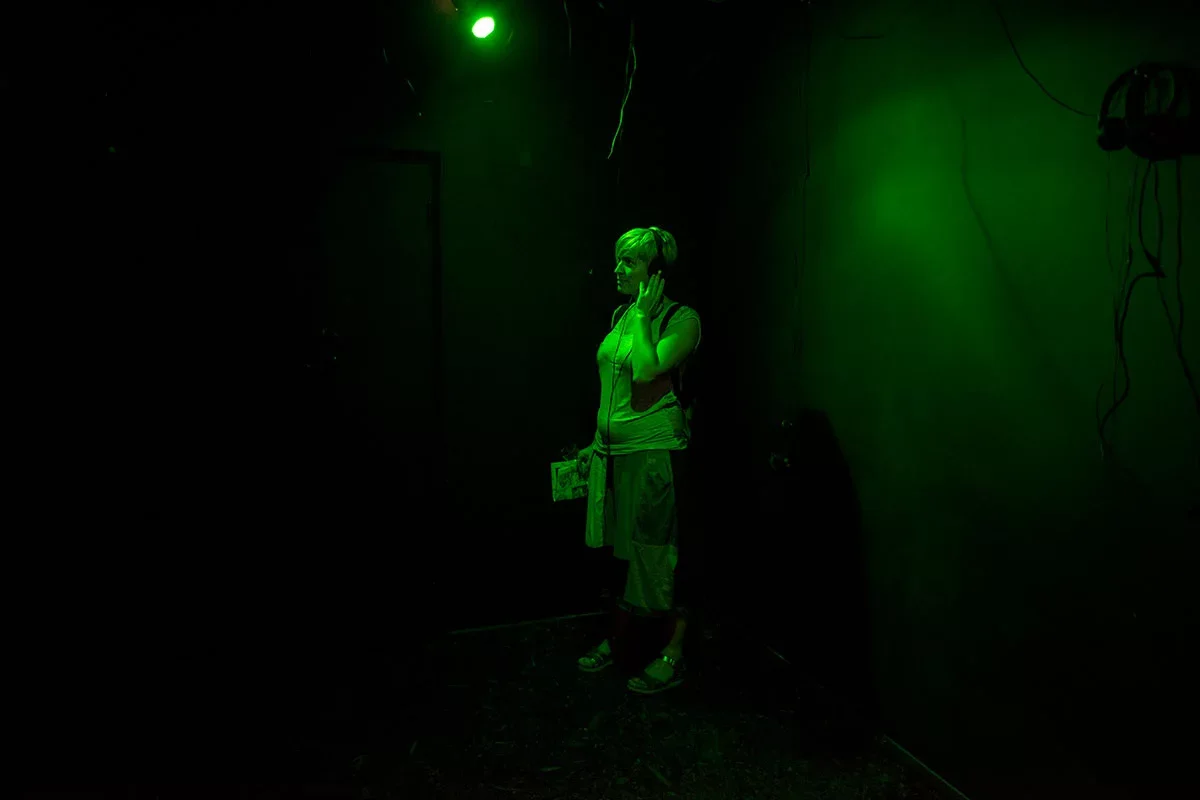
Treebour — Marija Bozinovska Jones: A sound installation featuring three anthropomorphised trees, exploring the different kinds of labour that trees are expected to perform in contemporary society.
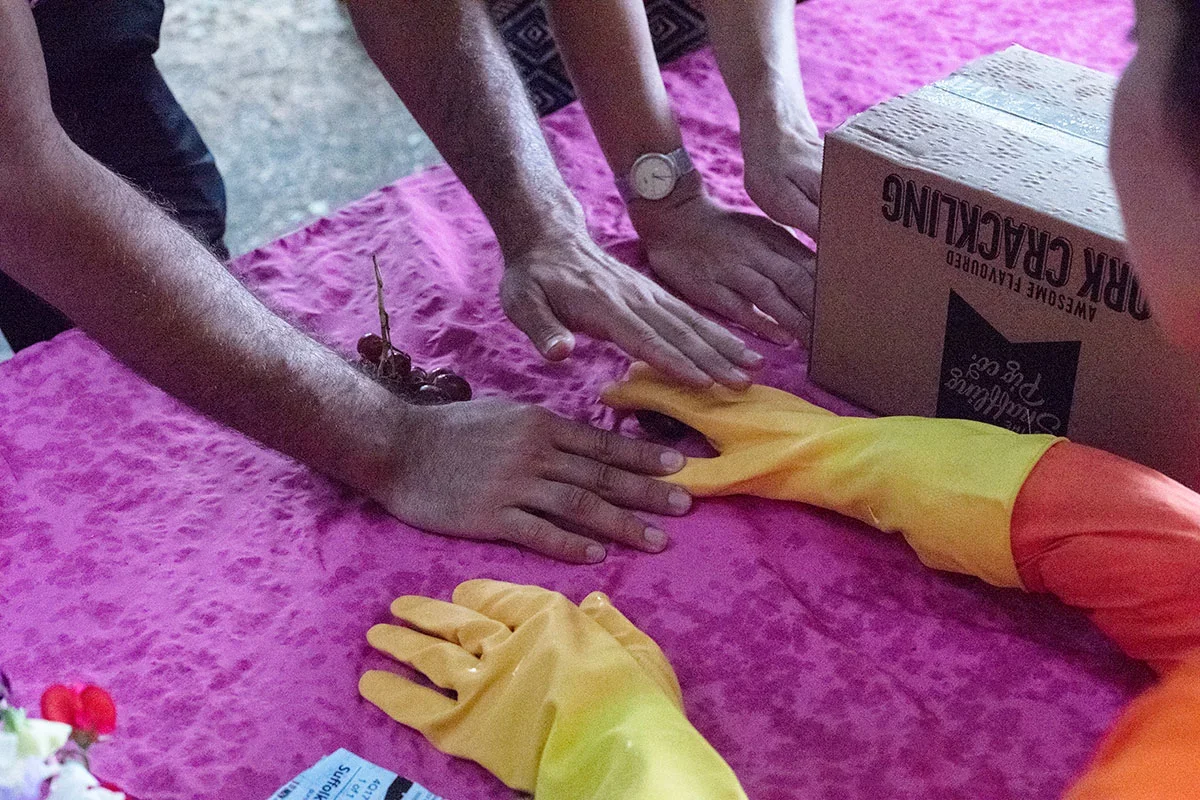
Feminist Economics — Cassie Thornton / The Feminist Economics Department: A participatory work connecting screen addiction, self-improvement culture and the economic systems that shape people's bodies and behaviour.
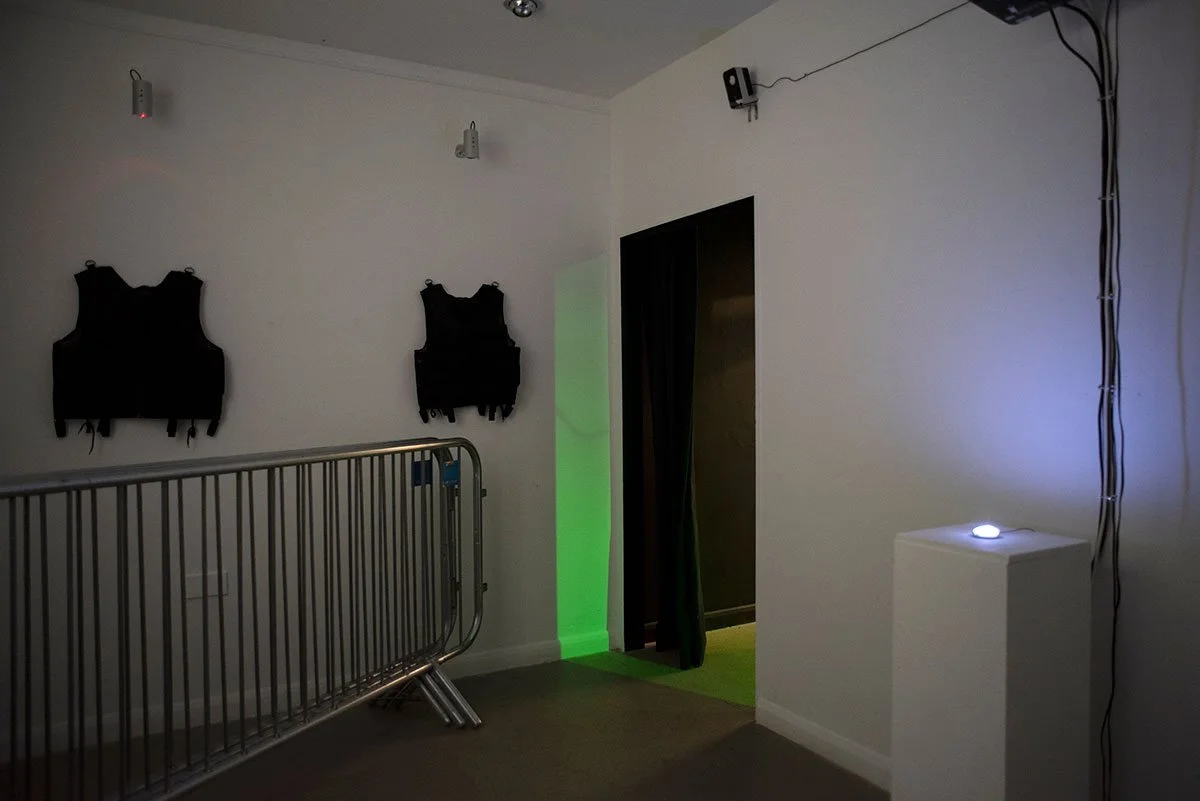
Hostile Environment Facility Training (HEFT) — Michael Straeubig: An interactive game examining how hostile design and institutional procedures can be used to exclude migrants from everyday spaces and services.
The programme also included online micro-commissions, performances and participatory activities extending the research beyond the gallery.
People & Partners
Curated by: Dani Admiss
Concept development: Dani Admiss and Cecilia Wee
Presented and produced with: Furtherfield, London
Exhibiting artists: Arjun Harrison-Mann, Benjamin Redgrove, Marija Bozinovska Jones, Cassie Thornton and Michael Straeubig
Research lab participants and contributors: Dani Admiss, Kevin Biderman, Marija Bozinovska Jones, Ruth Catlow, Maria Dada, Robert Gallagher, Beryl Graham, Miranda Hall, Arjun Harrison-Mann, Maz Hemming, Sanela Jahić, Annelise Keestra, Steven Levon Ounanian, Manu Luksch, Itai Palti, Andrej Primozic, Michael Straeubig, Cassie Thornton, Cecilia Wee and Jamie Woodcock.
Online micro-commissions: Maria Dada, Miranda Hall and Cassie Thornton
Private-view performance: Steven Levon Ounanian
Further Reading
Playbour: Work, Pleasure, Survival — Furtherfield exhibition archive
Discussing Playbour with Dani Admiss — interview by Marc Garrett