Sunlight Liberation Network
Arts Catalyst, UK and online · 2023-2025
How do we learn to live well with others within limits? What might become possible when people redirect their energies away from extraction and towards cultivating life?
Sunlight Liberation Network is an art and climate justice network initiated and curated by Dani Admiss. Bringing together artists, art workers and their communities, it creates spaces for peer learning, imaginative action and collective experimentation with more socially and ecologically just ways of living.
The network begins with the understanding that climate change cannot be separated from the everyday arrangements through which people live and work. Questions of energy, waste and consumption are also questions of labour, access, land, care and the unequal distribution of resources.
Through artistic commissions, workshops, publishing and shared learning, Sunlight brings different forms of knowledge and experience into conversation. Its work is concerned with the practical and imaginative possibilities of collective action: how people might support one another, develop new relationships and experiment with ways of living beyond the extractive everyday.
The network grew from Sunlight Doesn't Need a Pipeline (2021–2022), a collaborative project involving more than 200 artists, cultural workers and community members in developing a holistic decarbonisation plan for the arts.
Its second edition, Tending Waste, Cultivating Life (2024–2025), developed with Arts Catalyst in Sheffield, explored how attending to waste might become a way of cultivating different relationships with work, technology, food and one another.
Tending Waste, Cultivating Life
Sheffield and online, UK · November 2024 – February 2025 ·
How does dealing with our waste teach us about cultivating life?
Tending Waste, Cultivating Life was the second edition of Sunlight Liberation Network, developed in collaboration with Arts Catalyst.
The project began with the recognition that waste is never simply something thrown away. From leftover food and discarded technologies to exhausted workers and the manufactured decline of places, what societies consider disposable reveals much about the relationships and values through which everyday life is organised.
Across three artist-led workshops in January 2025, Sheffield-based organisations, art workers, residents and grassroots communities explored the possibilities of tending waste through food, labour and technology.
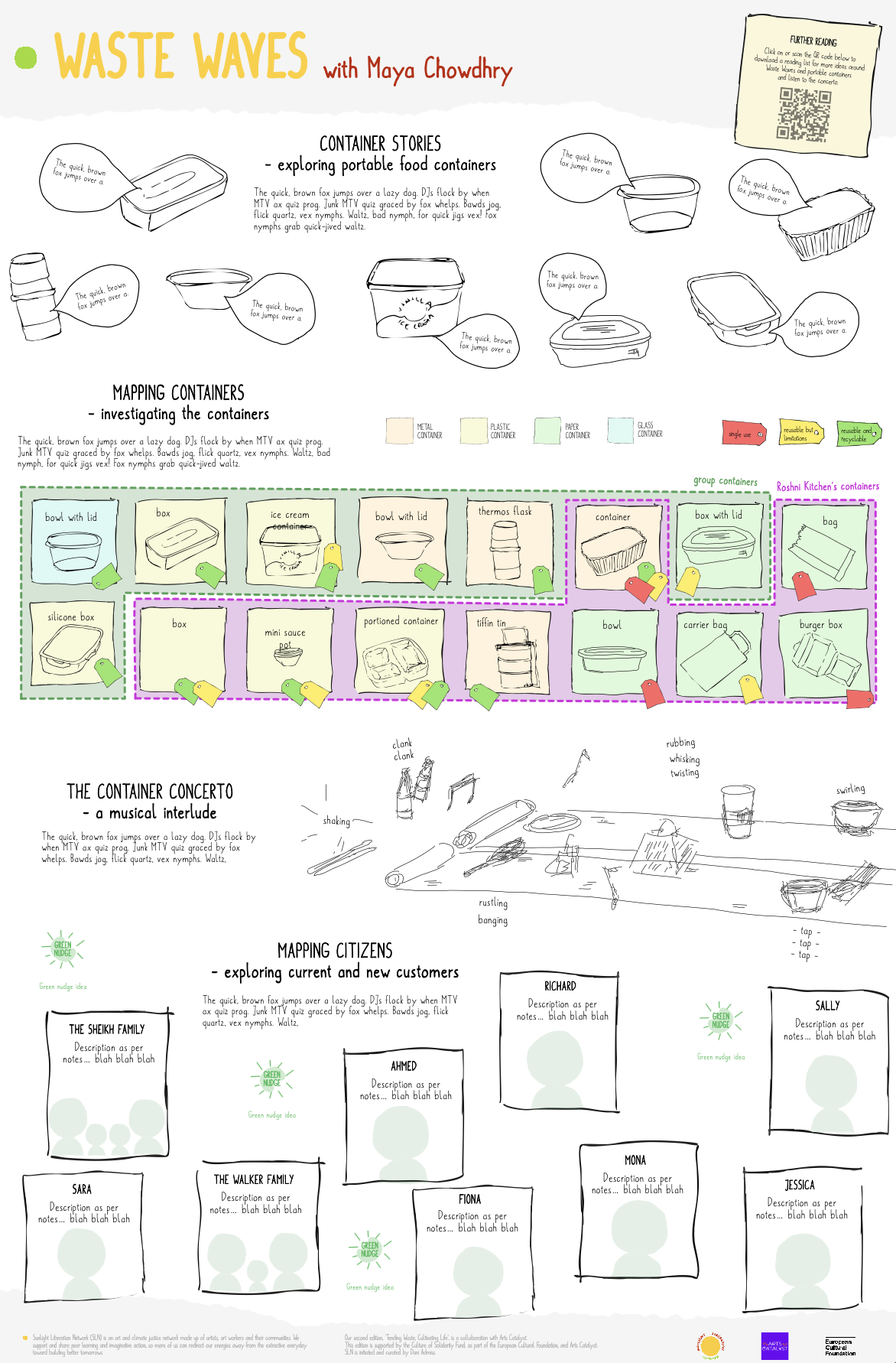
In Waste Waves, Maya Chowdhry collaborated with Roshni Kitchen, a South Asian community food organisation, to explore wasted food and its relationships across human and more-than-human worlds.
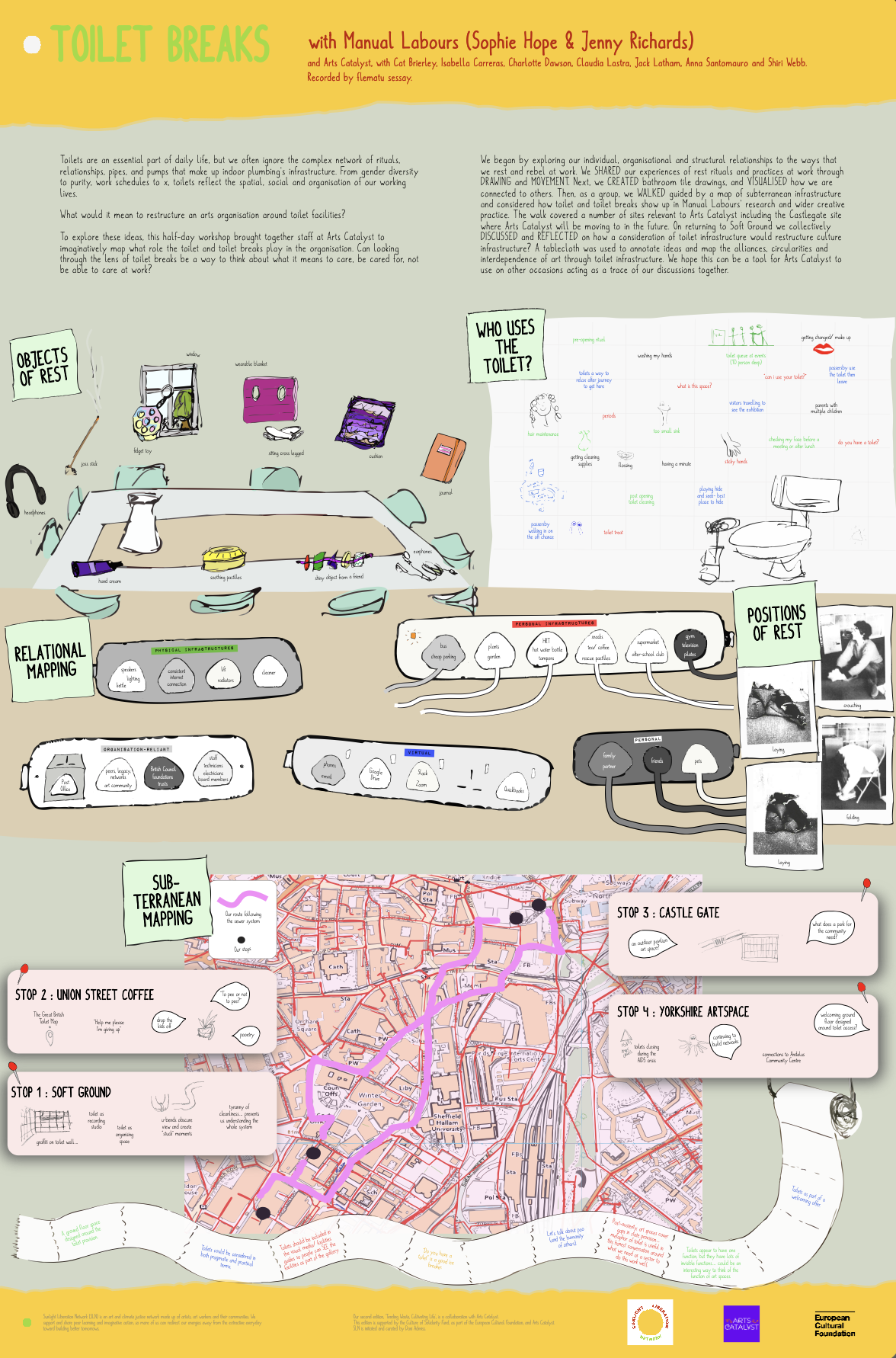
In Toilet Breaks, Manual Labours (Sophie Hope and Jenny Richards) began with the toilets at Arts Catalyst's Soft Ground space, using the everyday act of taking a break to explore workers' rights and the infrastructures of care, maintenance and refuge that sustain working life.
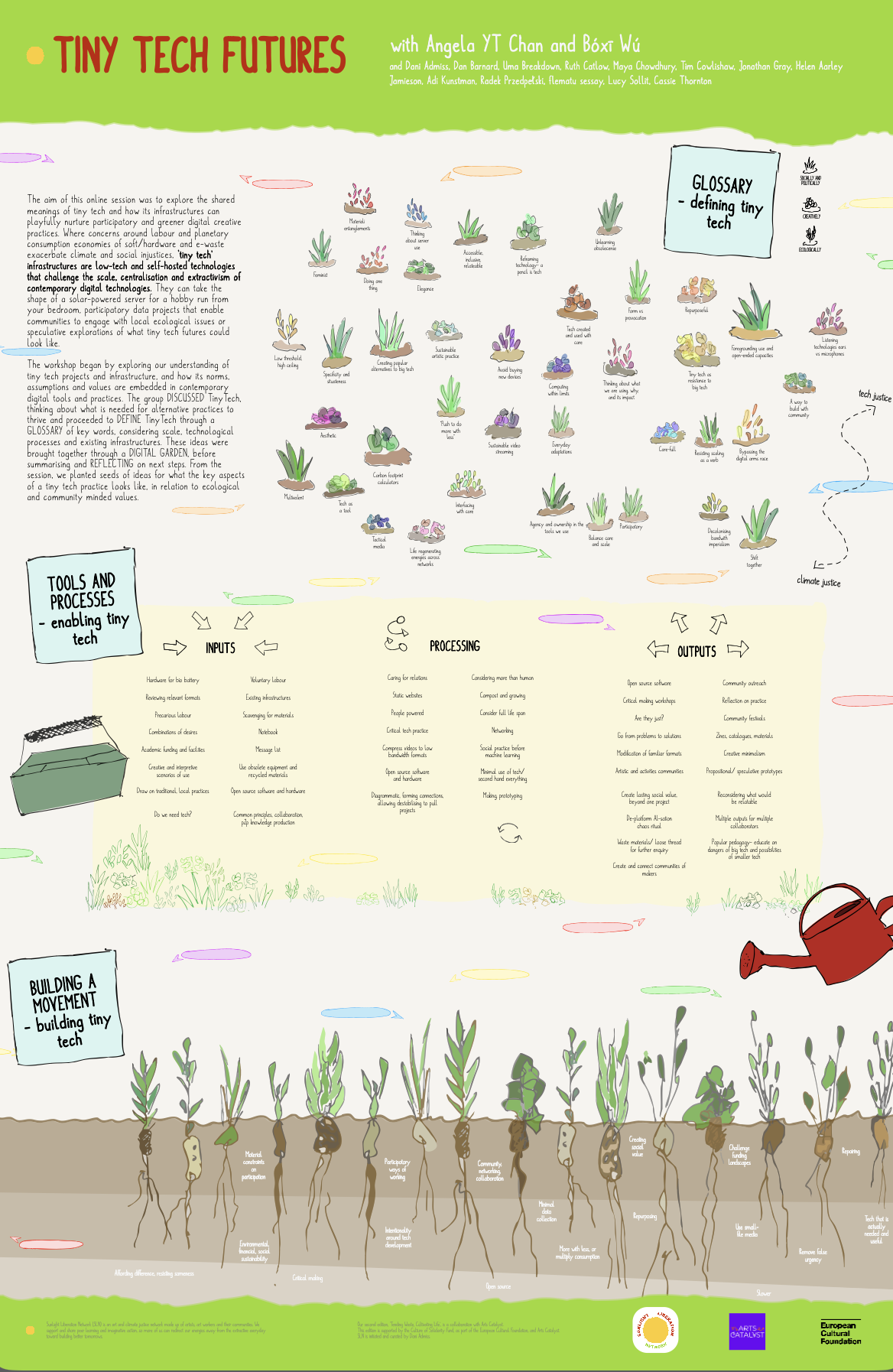
In Tiny Infrastructures, Angela YT Chan and Bóxī Wú brought artists and communities together to imagine low-tech and self-hosted alternatives to resource-intensive digital systems.
Designer flematu sessay, working as Public Tactics, followed the workshops through visual note-taking, creating three posters that carry their conversations, questions and propositions beyond the events themselves.
Together, these commissions approached waste not simply as a problem to be managed, but as a way of noticing the relationships through which life is sustained. They asked what might happen if the energy spent maintaining systems of consumption and disposability were redirected towards caring for people, places and the environments they share.
Format: Artistic commissions and participatory workshops
People & Partners
Initiated and curated by: Dani Admiss
Commissioning and project partner: Arts Catalyst, Sheffield
Commissioned artists and researchers:
Maya Chowdhry — Waste Waves
Manual Labours (Sophie Hope and Jenny Richards) — Toilet Breaks
Angela YT Chan and Bóxī Wú — Tiny Infrastructures
Public Tactics (flematu sessay) — visual documentation and poster design
Community collaborator: Roshni Kitchen, Sheffield
Participants: Sheffield-based grassroots and arts organisations, cultural workers, residents and community members
Supported by: Arts Catalyst and the Culture of Solidarity Fund, an initiative of the European Cultural Foundation
Developed through: Artangel's Making Time residency, building on the earlier Sunlight Doesn't Need a Pipeline project at Stanley Picker Gallery, Kingston University.
Further Reading
Sunlight Liberation Network: Tending Waste, Cultivating Life
Arts Catalyst, 2024–2025
Project documentation, commissioned artists and workshop resources.
https://artscatalyst.org/whats-on/sunlight-liberation-network-tending-waste-cultivating-life/
Everyday Adaptations — Dani Admiss
Arts Catalyst, February 2025
An essay reflecting on Sunlight Liberation Network, collective learning and climate adaptation in everyday life.
https://artscatalyst.org/blog/sunlight-liberation-network-everyday-adaptations/